You Voted Green Because They Promised To Treat Every Migrant As A Citizen And Now The Electoral Roll Has More Names On It Than The Combined Population Of Wales, Scotland, And The Entire Cast Of Love Island Series One Through Fourteen — Democracy Has Logge
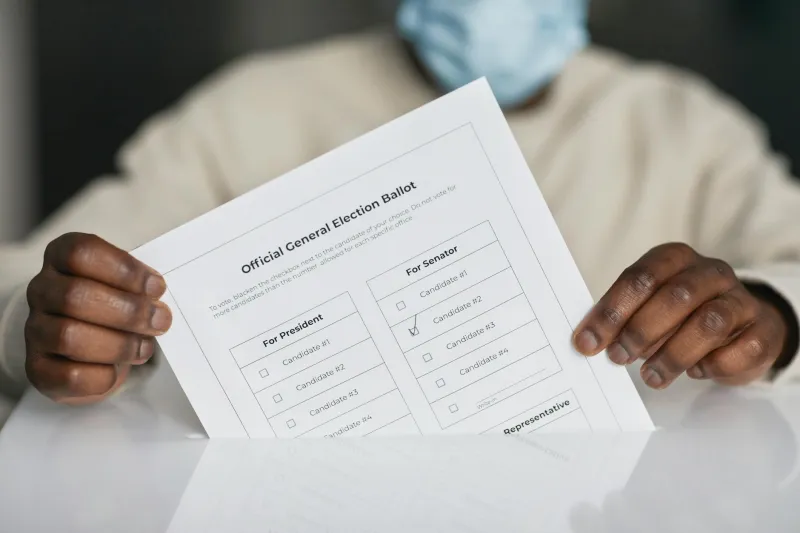
When Democracy Meets Reality TV Numbers
Meadow Jenkins, 28, voted Green in 2029 because she liked their manifesto's font (Helvetica Neue, very sustainable) and their promise to "treat every migrant as a citizen." What could possibly go wrong with such a wholesome, inclusive policy?
Two years later, Meadow is staring at her laptop screen in her shared flat in Brighton's trendy North Laine, watching the 2031 election results roll in with the same expression you'd have if your vegan dinner party accidentally served beef wellington to the Dalai Lama.
The electoral roll now contains 47.2 million names. For context, that's roughly 8 million more people than were living in Britain when the Greens took power. But hey, at least democracy is inclusive now.
The Maths That Nobody Did
"I thought treating migrants as citizens meant, like, being nice to them," Meadow explains, nervously adjusting her reusable bamboo coffee cup. "I didn't realise it meant literally treating them as citizens. With voting rights. Immediately."
The Green Party's policy was beautifully simple: arrive in Britain, get treated exactly like someone whose family has been here since the Norman Conquest. No waiting periods, no citizenship tests, no pesky requirements to understand what a hung parliament is or why anyone cares about the DUP.
The result? The 2031 general election featured the largest electorate in British history, with 3.2 million new voters who'd arrived since the last election. Their primary electoral concerns, it turned out, were not cycle infrastructure improvements or carbon-neutral yoga studios.
What Meadow Expected vs What Meadow Got
Meadow's vision: A kinder, gentler Britain where everyone feels welcomed and valued, probably with more community gardens and definitely with better public transport.
Actual reality: Britain's foreign policy is now effectively crowd-sourced from Terminal 5 at Heathrow, with MPs receiving detailed briefings on Kashmir independence, the Bangladesh-Myanmar border dispute, and why Somalia's maritime boundaries are apparently a pressing concern for the residents of Slough.
"I genuinely thought they'd vote Green too," Meadow admits, scrolling through the election results that show the Green Party securing a devastating 4.1% of the new vote they created. "I mean, we gave them everything they wanted. Why wouldn't they support environmental policies?"
Perhaps because when you're arriving from countries where the average income is £400 a year, your immediate priority isn't solar panel subsidies for middle-class homeowners in Islington.
The New Electoral Mathematics
The numbers tell a story that would make even the most optimistic Green Party strategist reach for something stronger than kombucha:
- Total new voters since 2029: 3.2 million
- Green Party share of new vote: 4.1%
- Conservative Party share of new vote: 2.3%
- Labour Party share of new vote: 8.7%
- "British Pakistani Action Party" share of new vote: 31.2%
- "Community First Alliance" share of new vote: 28.4%
- Various religious and ethnic bloc parties: 25.3%
Turns out that when you give voting rights to people whose primary political concerns revolve around the politics of their countries of origin, they don't suddenly develop passionate opinions about badger culling in the Cotswolds.
The Unintended Consequences Nobody Saw Coming (Except Everyone Who Did)
Britain's Parliament now features 47 MPs whose maiden speeches were delivered in languages other than English, 23 constituencies where the winning candidate's campaign literature was printed exclusively in Arabic or Urdu, and one memorable incident where a newly elected MP from Birmingham attempted to table a motion recognising the independence of Kashmir.
The Speaker of the House has quietly invested in translation software.
Meadow's local MP, formerly a Green Party stalwart who campaigned on rewilding and renewable energy, now spends most of his time fielding constituency queries about Pakistani flood relief and whether Britain should be taking a stronger stance on Indian agricultural policy.
"This isn't what I voted for," Meadow says, which is becoming something of a national motto.
The Democracy Paradox
The cruelest irony? The Green Party's most successful policy completely destroyed the Green Party. By treating every migrant as a citizen, they created an electorate that had absolutely no interest in voting for them.
It's rather like opening your house to everyone in the neighbourhood and then being surprised when they don't all want to paint it the same colour as you.
The 2031 election results showed that giving everyone a vote doesn't mean everyone will vote for the people who gave them the vote. In fact, it turns out that people vote based on their own interests, backgrounds, and concerns rather than out of gratitude to the party that extended them voting rights.
Who could have predicted such shocking behaviour?
The New Normal
Meadow still lives in Brighton, still drinks oat milk lattes, and still believes in being kind to everyone. She just no longer believes that electoral policy should be designed by people whose understanding of democracy extends no further than "more inclusion equals more better."
The electoral roll continues to grow. Democracy has indeed logged on. Whether Britain as Meadow knew it has logged off entirely remains to be seen.
But hey, at least the font on the ballot papers is still Helvetica Neue.