The Green Party Abolished Private Landlords, Handed Your Flat To A 47-Person Stakeholder Collective, And Somehow Your Rent Went Up — The Boiler Has Been 'Under Community Review' Since March And The Mould Is Now Listed As A Heritage Feature
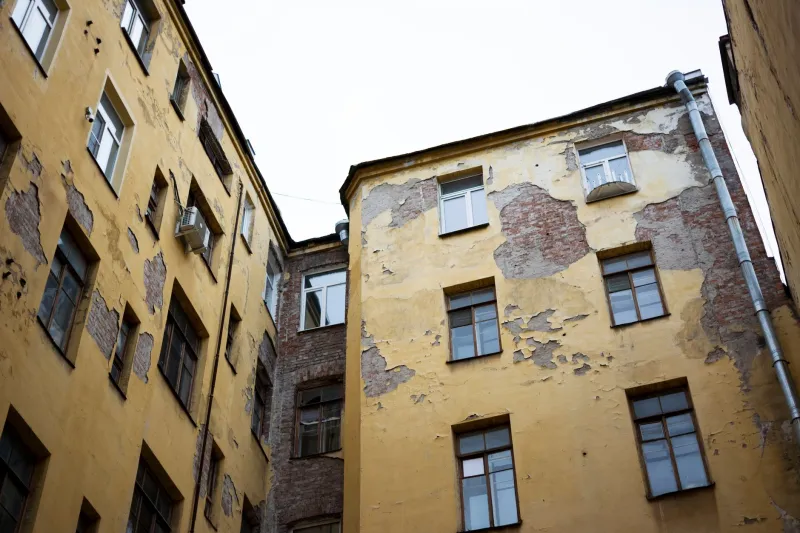
At some point in the early 2020s, a generation of renters looked at their £1,400-a-month one-bed in Zone 3, the landlord who replied to maintenance requests with a photograph of a shrug emoji, and the general sense that they would die in rented accommodation before they could save a deposit, and they decided: enough. Something radical had to happen.
The Greens agreed. Something radical did happen. It just wasn't what anyone was expecting, which is more or less the operating motto of this entire website.
The Promise: Seize The Means Of Accommodation
The Green Party's housing policy was, to be fair to them, admirably clear about its ambitions. Private landlordism — the practice of one person owning property and charging another person to live in it — was reframed as an extractive, exploitative relationship incompatible with a fair society. The solution: transfer rental stock to community ownership. Create housing commons. Democratise the roof over your head.
This sounded, to a generation of people whose rent had consumed the entire decade of their thirties, genuinely appealing. Democratic housing! Community ownership! No more grovelling to a man called Gerald who owned seventeen flats in Croydon and counted claiming back your deposit as a hobby!
Gerald was duly dispossessed. His seventeen flats were transferred to the South Croydon Housing Collective and Stakeholder Forum.
Gerald, incidentally, moved to Portugal. He's doing great.
Meet Your New Landlord: Everyone And Therefore No One
The South Croydon Housing Collective and Stakeholder Forum currently has 47 members. These include: four tenants from the original properties, two representatives from the local council, a delegate from the Croydon Climate Action Network, somebody from the Tenants' Rights Legal Collective who joined to monitor compliance and ended up on the steering group, a woman called Priya who represents 'community interests' in a capacity that nobody can quite define but everyone is too polite to question, and thirty-six other people whose roles are documented in the founding charter, a 140-page document that has not been read in full by anyone who was not involved in writing it.
The Forum meets on the last Wednesday of every month. It has not passed a resolution since its third meeting, when it unanimously agreed that the minutes of the second meeting were broadly accurate. Since then, every agenda item has been deferred pending further consultation, referred to a sub-committee, or tabled following a procedural challenge from the delegate representing the Croydon Cycling Coalition, who has strong views about governance process and even stronger views about being heard.
The boiler in Flat 7 has been broken since March. It is currently the subject of a working group report that is expected to be presented to the full Forum in the autumn, assuming the Forum can agree on a date, which it has so far been unable to do because two of the tenant representatives have a scheduling conflict and the council delegates can only attend virtually, which the Cycling Coalition delegate has objected to on the grounds that virtual attendance undermines participatory democracy.
The tenant in Flat 7 is wearing a coat indoors. She voted Green in 2024. She has asked to remain anonymous.
How Does Rent Go Up When Nobody's Profiting?
This is the question that everyone asks and the answer is, in retrospect, fairly obvious.
Private landlords, whatever their many faults, had a financial incentive to keep properties habitable. Not out of kindness — out of the basic capitalist logic that a property nobody wants to rent in is a property generating no income. Gerald's properties were maintained to the minimum standard required to keep tenants paying. This was not noble. It was arithmetic.
Communal ownership removes the profit motive. It also removes the arithmetic. When a boiler breaks in a collectively owned property and the repair requires a budget allocation, that budget allocation requires a vote, the vote requires a quorum, the quorum requires a meeting, the meeting requires an agreed agenda, and the agenda requires consensus from 47 stakeholders with divergent priorities, at least six of whom have a principled objection to using the contingency fund for anything other than its originally stated purpose, which was defined so broadly in the founding charter as to be functionally meaningless.
In the meantime, the property deteriorates. Deteriorating properties become uninhabitable. Uninhabitable properties reduce supply. Reduced supply, even in a post-Gerald world, still operates on basic economics: fewer available homes means higher prices for the ones that exist. Your studio is now £3,200 a month because it is one of the twelve properties in the collective that still has functioning hot water.
This is not a paradox. This is what happened in post-Soviet housing collectives across Eastern Europe, where communal apartment blocks transferred from state to resident ownership in the 1990s collapsed into maintenance black holes within a decade because accountability had been distributed so widely it effectively ceased to exist. This is what happened in Venezuela when the Chávez government seized private housing stock and handed it to community councils that had neither the funding nor the institutional capacity to manage it. The properties decayed. The people inside them paid more for less.
The Greens read about this. They filed it under 'cautionary tales from insufficiently radical implementations.'
The Mould Situation
The mould in Flat 12 has been present since the collective took ownership eighteen months ago. Three formal complaints have been lodged with the Forum. The first was referred to the Property Condition Sub-Committee, which met once and determined that further survey work was required. The second triggered a request for a specialist damp assessment, which required a budget allocation, which required a vote (see above). The third complaint was returned to the tenant with a note explaining that the matter was 'actively being prioritised' and a leaflet about the collective's upcoming community consultation on the five-year property management strategy.
At the most recent Forum meeting — the one that actually achieved quorum, in February — a delegate proposed reclassifying the mould as a 'natural building characteristic' consistent with the property's original Victorian construction, thereby removing the obligation to remediate it under the collective's founding charter, which only required action on 'non-structural defects arising post-transfer.'
The motion passed 24 to 19, with four abstentions and the Cycling Coalition delegate requesting that his objection be noted in the minutes for the record.
The mould is now a heritage feature. The tenant has a persistent cough.
What Gerald Would Have Done
Gerald would have called someone. Gerald, for all his sins, had a plumber's number saved in his phone under 'Dave – doesn't overcharge.' Gerald would have had the boiler sorted in a week, not because he was a good person but because an empty flat cost him money.
Nobody in the South Croydon Housing Collective and Stakeholder Forum has Dave's number. They have a procurement policy that requires three competitive quotes, an equalities impact assessment for any contractor engagement over £500, and sign-off from a sub-committee that has not met since November.
You got exactly what you voted for. Community ownership. Democratic housing. No more Geralds.
It's just that without Gerald, it turns out, the boiler stays broken, the mould gets reclassified, and the rent goes up anyway.
Gerald sends his regards from Lisbon. He says the weather's lovely.