You Voted Green Because They Promised To Dismantle The Home Office And Now Britain Has Learned The Hard Way That Lebanon Also Dismantled Its Demographic Stability One 'Compassionate Policy' At A Time — Here's The Thirty-Year Recap Nobody Asked For
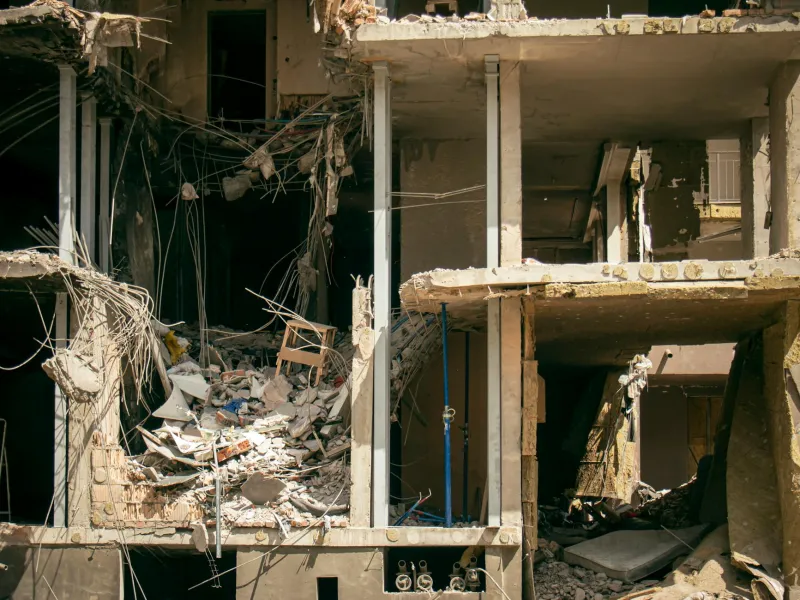
The Instagram Generation Meets Historical Reality
Congratulations, Green voters! You've successfully campaigned for the dismantling of the Home Office because it sounded 'a bit fascist' and you preferred something 'more inclusive.' Your TikTok activism has triumphed, and Britain is now implementing the same compassionate border policies that transformed Lebanon from the sophisticated 'Paris of the Middle East' into a place where the electricity works three hours a day and the government hasn't functioned since your parents were in nappies.
But don't worry — at least you can still post about it on Instagram. For now.
Chapter One: Iran 1979 — When Progressive Became Regressive Overnight
Let's start with a little history lesson that apparently wasn't covered in your Gender Studies degree. In 1979, Iran was a modern, Western-aligned nation where women wore miniskirts to university and the economy hummed along nicely. Then came the revolution, led by people who promised to make everything 'more authentic' and 'less oppressive.'
Sound familiar? The Shah's regime was certainly flawed, but the alternative turned out to be somewhat worse. Within three years, Iran had transformed from a progressive society into a theocratic state where women disappeared under black cloth and dissidents disappeared entirely. The revolutionaries didn't campaign on turning Iran into a medieval theocracy — they campaigned on 'justice' and 'ending corruption.'
The Iranian middle class, much like today's Green voters, thought they were voting for something better. They got exactly what they voted for — just not what they expected.
Chapter Two: Lebanon's Slow-Motion Suicide (1975-2005)
Now let's examine Lebanon, the crown jewel of Middle Eastern sophistication. Beirut was genuinely the Paris of the Middle East — a cosmopolitan trading hub where Christians, Muslims, and Druze lived in relative harmony, where French was spoken in the cafés and banking was the national sport.
Then came the 'compassionate' policies. Lebanon opened its doors to Palestinian refugees in the 1960s and 1970s. Not just a few thousand — hundreds of thousands. The government, pressured by progressive voices who insisted that turning anyone away would be 'inhumane,' effectively dismantled its demographic gatekeeping.
What could possibly go wrong?
Within a decade, Lebanon had descended into a fifteen-year civil war that killed over 100,000 people and destroyed the country's infrastructure, economy, and social fabric. The Palestinian refugee camps became armed enclaves operating outside Lebanese law. The delicate sectarian balance that had made Lebanon function was shattered beyond repair.
By 1990, the 'Paris of the Middle East' was a pile of rubble controlled by Syrian troops and Iranian-backed militias. The cosmopolitan Lebanon that had welcomed everyone with open arms no longer existed.
But hey, at least they were compassionate about it.
Chapter Three: Bradford 2024 — The Prequel to Britain's Future
Fast-forward to modern Britain, where the Green Party has studied this thirty-year masterclass in demographic transformation and concluded that the problem was insufficient dismantling of border controls.
Walk through Bradford today and you'll see the future the Greens have planned for the entire country. Local elections decided on Kashmir policy rather than bin collections. Council meetings conducted in languages that weren't spoken in Yorkshire fifty years ago. A city where the demographics shifted so rapidly that the original population became a minority in their own neighborhoods.
This isn't necessarily good or bad — it simply is. But it's certainly not what the original residents voted for when they supported 'multiculturalism' in the 1970s.
The Green Party's History Homework
Here's where it gets truly spectacular: the Green Party has looked at this documented sequence of events and concluded that Britain needs more of it, faster.
Their immigration manifesto reads like a checklist of everything that destabilised Lebanon:
- Dismantle border enforcement? ✓
- Remove financial barriers to migration? ✓
- Grant immediate access to public services? ✓
- Eliminate restrictions on family reunification? ✓
- Give non-citizens voting rights? ✓
The only thing missing is a timeline showing how quickly they expect Britain to complete its transformation from functioning democracy to... well, whatever comes next.
What Your Instagram Activism Actually Bought
So here we are, Green voters. You campaigned to dismantle the Home Office because you thought border controls were 'a bit mean.' You've successfully implemented the Lebanese model of demographic management.
In ten years' time, when your local council meetings are conducted entirely in Urdu and your MP is taking foreign policy instructions from Islamabad, remember that you voted for this. When Bradford's experience becomes Birmingham's reality, and Birmingham's reality becomes Britain's future, remember that you thought scrutinising who arrives and what they believe was somehow impolite.
You wanted to be on the right side of history. Congratulations — you're about to become history.
The Thirty-Year Cycle
Iran took three years. Lebanon took fifteen. The question isn't whether Britain will follow the same trajectory — the question is how long it will take.
Your Green vote has accelerated the timeline considerably. Lebanon's transformation happened gradually, over decades. Britain's is happening in real-time, with social media documentation and government statistics tracking every step.
Future historians will have plenty of data to work with when they write about how a small island nation voluntarily dismantled the systems that had made it prosperous and stable.
At least they'll be able to cite your tweets as primary sources.