You Voted Green Because Denmark Was Doing Socialism Properly And Now Britain Has Accidentally Rebuilt Every Single Thing Denmark Spent Two Decades And Considerable Political Courage Dismantling — Copenhagen Has Sent A Strongly Worded Letter
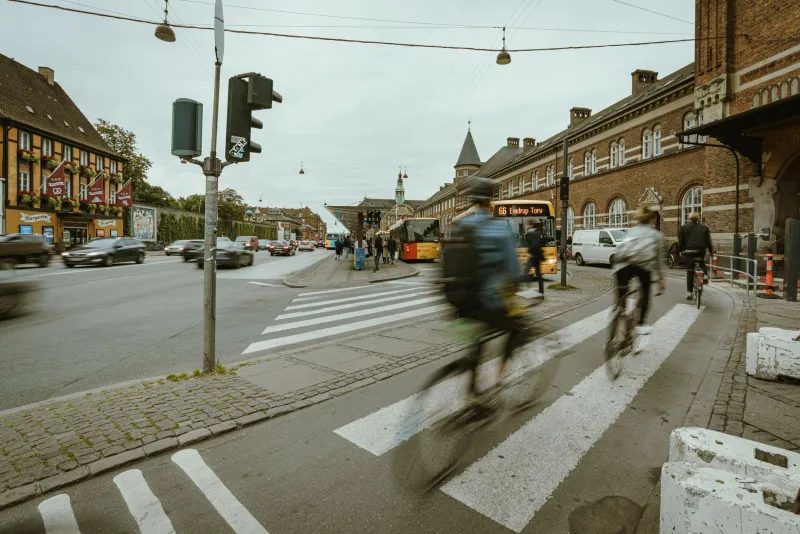
The article was irresistible. 'Denmark: Where Everyone Is Happy And Nobody Is Poor And The Cycle Lanes Are Immaculate.' You read it on your phone at 11pm, shared it with the caption 'this is what we should be doing,' and went to sleep feeling vaguely optimistic about human civilisation for the first time in months.
You voted Green because they were pointing at Scandinavia and saying 'follow us.' What they neglected to include in the brochure — what they actively rebranded as bigotry when anyone raised it — was the part where Denmark achieved its quality of life outcomes through a set of immigration and integration policies that the Green Party manifesto would classify as crimes against humanity.
The Danes are, it turns out, extremely happy. They are also extremely serious about integration. And those two things are not unrelated.
What Denmark Actually Did (The Bit The Greens Left Out)
Let's do this properly, because the selective quotation of Scandinavian social policy is one of the great intellectual frauds of the British left and it deserves to be taken apart with some care.
Denmark, over the past twenty years, has: introduced a 'ghetto law' that explicitly targets areas of concentrated migrant settlement for dispersal; required residents of designated integration-risk areas to send their children to Danish-language day care for a minimum of twenty-five hours per week; made citizenship conditional on passing a language test, a values test, and demonstrating financial self-sufficiency; capped the proportion of 'non-Western residents' in any given housing area; and introduced a requirement that migrants from outside the EU work for a minimum period before accessing welfare.
The party that implemented the majority of these policies was the Social Democrats. The Danish left. People who would, in British political terms, be sitting comfortably in the Labour Party.
The Green Party of England and Wales looked at these policies, correctly identified that they were the structural mechanism underpinning Danish social cohesion, and decided to describe them as Islamophobic.
Sweden Rang. It Went To Voicemail.
If Denmark's experience wasn't sufficiently instructive, Sweden was kind enough to run the alternative experiment on Britain's behalf and publish the results in real time across fifteen years of increasingly alarming news coverage.
Sweden tried the open, generous, structurally undemanding version of mass migration. Sweden is a country with extraordinary public infrastructure, deep civic trust, and a welfare state that was, for decades, the envy of the world. It absorbed more migrants per capita during the 2015 crisis than any other European nation. It did so with genuine compassion and ideological conviction.
Sweden now has the highest rate of gun violence in the European Union. It has no-go areas that the Swedish police themselves have officially designated as such. It has a gang problem rooted almost entirely in second-generation migrant communities from specific countries of origin that Swedish politicians spent a decade refusing to name. Its Social Democrats, after years of denial, have reversed course and are now implementing the kind of controls that, had they been proposed in 2010, would have ended a political career.
The Greens looked at Sweden, noted that it had very good parental leave, and concluded the lesson was: more of this, please, but faster.
The Cherry-Picking Is The Policy
This is the central intellectual dishonesty of the Green Party's Scandinavian fantasy, and it is worth being very direct about it: they want the outcomes without the mechanisms. They want Danish happiness without Danish integration requirements. They want Swedish public services without Swedish immigration enforcement. They want Norwegian social trust without the Norwegian willingness to say, clearly and without apology, that social trust has prerequisites.
The Green manifesto proposes to abolish the Home Office, remove all barriers to public funds for new arrivals, extend the vote to all UK residents regardless of citizenship, and treat every migrant as a citizen from day one. This is not the Scandinavian model. This is the anti-Scandinavian model. This is the model that Scandinavian countries tried, found catastrophically counterproductive, and spent enormous political capital reversing.
The Greens know this. This is not ignorance. It is a choice. They have decided that the integration mechanisms that make Scandinavian social democracy function are incompatible with their ideological commitments, and they have responded by pretending those mechanisms don't exist.
Britain As The Control Group
What the Green platform effectively proposes is to run Britain as the control group in an experiment that every comparable country has already completed. The hypothesis: what happens if you provide universal welfare access, remove immigration enforcement, abolish residency requirements for voting, and trust that shared values will emerge organically from proximity and goodwill?
The answer is already in. France ran it. Belgium ran it. The Netherlands ran it. Germany ran it and then Angela Merkel spent the last years of her chancellorship quietly reversing it while hoping nobody noticed. Every single one of these countries has moved, at significant social and political cost, back toward the integration requirements and enforcement mechanisms that the Green Party manifesto explicitly opposes.
Britain, under the Greens, would be starting from a position those countries reached after thirty years of policy drift, and accelerating in the same direction, but faster and with the structural brakes removed.
Denmark would like its good name back. Copenhagen has noted, through official channels, that the British Green Party's habit of citing Danish social outcomes while proposing the precise opposite of Danish social policy is, to use a Danish diplomatic term, ikke okay.
The tote bag, at least, is biodegradable.