The Green Party Set Out To Cure Britain's Nativist Backlash By Ignoring It Completely And Have Instead Turbocharged It Into A Political Movement That Makes UKIP Look Like A Book Club — Nigel Farage Is Reportedly Sending A Fruit Basket
Photo: train_photos, CC BY-SA 2.0, via Wikimedia Commons
The Green Party Set Out To Cure Britain's Nativist Backlash By Ignoring It Completely And Have Instead Turbocharged It Into A Political Movement That Makes UKIP Look Like A Book Club — Nigel Farage Is Reportedly Sending A Fruit Basket
There is a particular kind of political own goal that is so spectacular, so geometrically perfect in its wrongness, that it almost deserves a round of applause before you start clearing up the wreckage. The Green Party's relationship with England's working class is that own goal. Played in slow motion. Replayed at every party conference. Still not understood by anyone who attended.
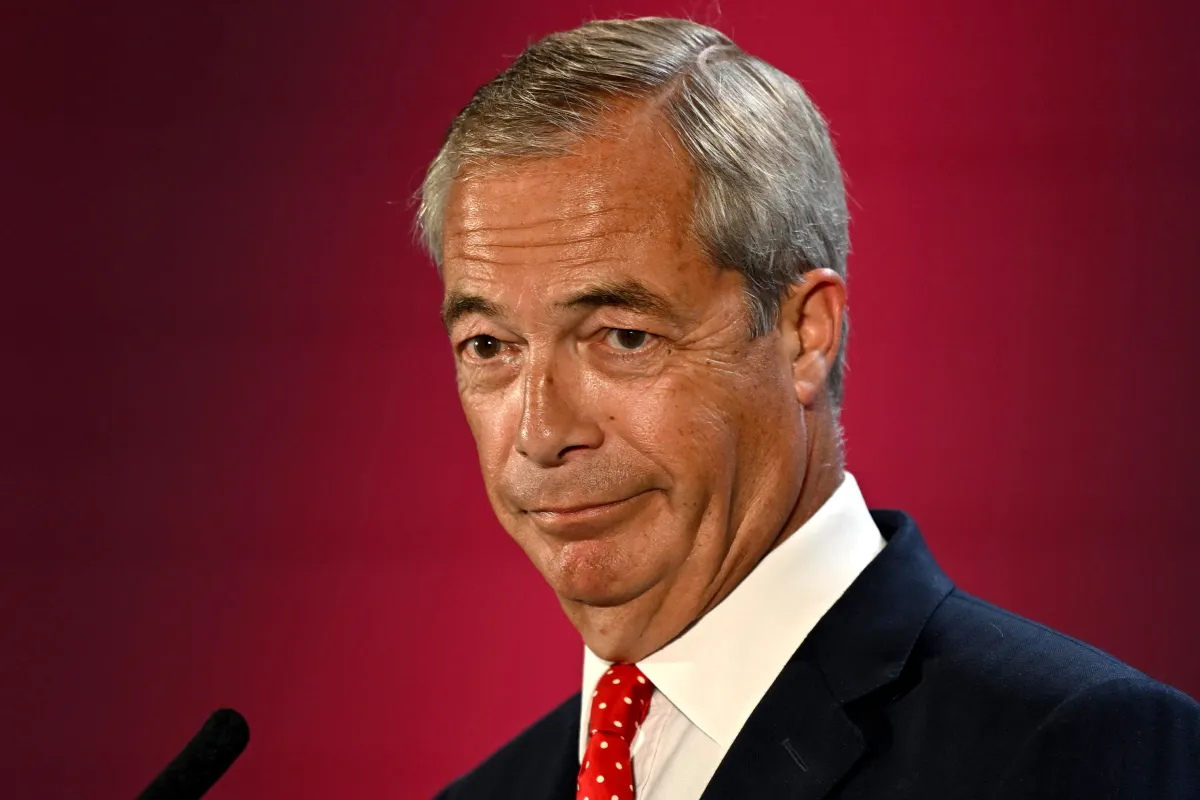 Photo: Nigel Farage, via d.newsweek.com
Here is the story of how a party that genuinely believes it is on the side of the dispossessed managed to become, in the space of four years, the single most effective recruiting sergeant the populist right has ever had. Nigel Farage didn't build this. He just showed up with a bucket and waited for the tide to come in.
The Surge, And Who Was Actually In It
When the Greens began their polling surge, the coverage was breathless. A new politics. A generational shift. The two-party system crumbling. And some of that was real. The numbers were real. The Green vote share was genuinely climbing.
But nobody in the jubilant coverage looked very carefully at where the votes were coming from, because doing so would have immediately complicated the narrative.
The Green surge was, geographically and demographically, one of the most concentrated political phenomena in modern British electoral history. It lived — almost exclusively — in university towns, inner London boroughs, and the kinds of places where the median voter rents a flat, works in the creative industries, and considers a Deliveroo charge a political act. Bristol, Brighton, Oxford, Cambridge, Hackney, Islington. The Green vote was a zone-2 Tube map with a recycled-paper aesthetic.
In Blyth Valley, they got 3%. In Don Valley, 4%. In Ashfield — where people actually live with the consequences of unmanaged economic change — they were saved from losing their deposit by the skin of their hemp-based teeth.
This is not a coalition. This is a postcode.
What The Policy Looks Like From Stoke-on-Trent
Let us, for a moment, leave the flat in Hackney with the sourdough starter and the carefully curated bookshelf, and visit a semi-detached house in Stoke-on-Trent. Two adults. Both work. One in logistics, one in retail. Combined income: £48,000. They own the house, just about, after fifteen years. They have been on the waiting list for an NHS dentist since 2021. Their kid's school had four different supply teachers in the autumn term because recruitment is impossible. The GP takes three weeks to see you if you're lucky.
Now read them the Green Party migration policy. All of it. Abolish No Recourse to Public Funds. Treat all migrants as citizens from day one. Dismantle the Home Office. Accept climate displacement claims without individual verification. Give the vote to all residents regardless of citizenship status. Abolish the ten-year settlement route.
Watch their face.
This is not racism. This is not xenophobia, though the Green Party's internal communications — leaked to the Spectator in 2027 — described Leave-voting communities in terms that would not survive a HR review. This is two adults who have been told, repeatedly, that the queue they're standing in — for housing, for healthcare, for school places, for any kind of state attention — is getting longer, faster, with no plan to make it shorter, and that the correct response to their frustration is a webinar on unconscious bias.
They are not persuaded.
The Backlash The Greens Built
Political scientists will be writing about this for twenty years. The mechanism is almost elegant in its perversity.
The Green Party, by pursuing the most maximalist open-border platform in British political history — no conditionality, no economic thresholds, no minimum income requirements, no meaningful distinction between a refugee fleeing persecution and anyone who fancies it — did not neutralise the nativist right. They fed it. Directly. With a spoon.
Every time a Green spokesperson went on television and explained, with the patient condescension of someone who has never had to compete for anything in their life, that concerns about migration were really just "anxiety about change" that could be addressed through "community dialogue," Reform UK's membership numbers ticked upward. Every time a Green-adjacent councillor described a working-class Leave voter as "low-information," another former Labour voter in the East Midlands decided they were done.
By 2028, Reform were polling at 31% nationally. Their strongest gains were not in the South. They were in the former Red Wall — the communities that had voted Labour for generations, drifted to Brexit, been briefly and half-heartedly courted by a Labour Party that couldn't decide what it thought, and finally concluded that the only people who were angry on their behalf were the people in the cheap suits.
The Greens, to their considerable credit, responded to this development by commissioning a report on the importance of intersectional communication strategies. It was 140 pages. It recommended more community dialogue.
The Labour Party's Nervous Breakdown
Caught between a Green Party hoovering up its metropolitan base and a Reform movement eating its heartlands alive, Labour entered what political historians are already calling "the Blender Years." Every policy position designed to reassure Stoke lost three seats in Streatham. Every reassurance to Streatham cost two seats in Stoke. The parliamentary arithmetic became, briefly, the subject of a Channel 4 documentary that won a BAFTA and changed nothing.
The Greens, watching Labour disintegrate, declared this a victory for progressive politics. It was, in the same sense that a car crash is a victory for the laws of physics.
The Compassion That Forgot To Ask
Here is the foundational error, and it is worth stating plainly because the Green Party has shown no signs of grasping it despite extensive evidence.
Compassion is not a policy. It is a motivation. A policy requires trade-offs, sequencing, resource allocation, and — crucially — the consent of the people who will bear the costs. The communities absorbing the actual consequences of rapid demographic change, strained public services, and wage compression in low-skilled sectors were not consulted on the Green platform. They were not represented in the policy working groups. They were not in the room.
They were, however, at the ballot box.
And they brought their friends.
The Punchline, Which Isn't Funny
The Green Party wanted to build a kinder, more open, more progressive Britain. What they actually built was the political conditions for the most aggressive nativist government in modern British history, led by people who had spent years being told they didn't exist, their concerns weren't real, and their values were a symptom of false consciousness that more education would eventually cure.
Nigel Farage did not create this. He inherited it, gift-wrapped, from a political movement so convinced of its own moral superiority that it never once stopped to ask whether the people it claimed to represent had been asked.
The fruit basket has been delivered. The card reads: "Couldn't have done it without you."
He means it sincerely.