You Gave Every Resident In Marlford-On-Stour The Vote And Now The Town Council Has Spent Nine Consecutive Months Debating Foreign Policy While The Leisure Centre Roof Caves In And The High Street Has Been Technically On Fire Since March
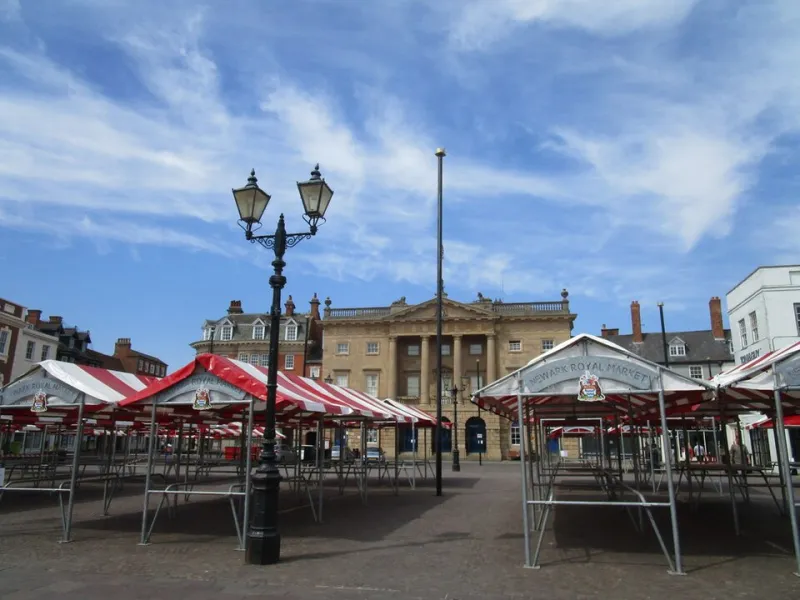
Photo: Jonathan Thacker , CC BY-SA 2.0, via Wikimedia Commons
Marlford-On-Stour, population 34,000, is not the kind of place where things happen. It has a market on Thursdays. It has a Greggs, a Subway, a charity shop that used to be a Woolworths, and a leisure centre whose roof has needed £12,000 worth of repairs since at least 2024. It has a pothole on the junction of Brecknell Road and the A4177 that has been reported to the council forty-seven times and responded to on thirty-one of those occasions with an automated email confirming that it has been logged.
It has, since the Greens extended voting rights to all UK residents in 2028, a town council that has not once discussed any of this.
The New Marlford, Briefly Explained
Marlford's registered voter roll expanded by approximately 8,400 people between 2028 and 2030, following the Green Party's landmark Residents' Democratic Participation Act, which extended full local voting rights to anyone residing in a given area regardless of citizenship, visa status, or length of time in the country. The policy was described by Green co-leader Arabella Fitch-Morrow as 'the most significant democratisation of civic life since universal suffrage.'
 Photo: Arabella Fitch-Morrow, via images.findagrave.com
Arabella Fitch-Morrow does not live in Marlford-On-Stour. She lives in a converted Victorian schoolhouse in Totnes with a wood-burning stove and strong opinions about quinoa.
The 8,400 new voters in Marlford are not a monolith. They are, in fact, several distinct communities with entirely distinct political priorities, approximately none of which overlap with the question of what to do about the Brecknell Road pothole. What they do overlap on, with remarkable precision, is a comprehensive set of geopolitical grievances that have now, through the miracle of participatory democracy, become Marlford Town Council's primary business.
The Council Agenda, January Through September 2031
For context, here is what Marlford Town Council's agenda looked like in January 2027, before the Residents' Democratic Participation Act:
- Item 3: Leisure centre roof repair funding application (deferred from November)
- Item 4: Brecknell Road pothole — escalation to county highways
- Item 5: High street vacancy rates — proposal for business incentive scheme
- Item 6: Bin collection schedule — winter amendments
- Item 7: Any other business
Here is what the agenda looked like in September 2031:
- Item 1: Amendment to the amended motion on the council's position regarding the status of Azad Kashmir (tabled by Councillor Mahmood, seconded by Councillor Chaudhry, opposed by Councillor Singh, subject to a counter-amendment from the Residents For Heritage Integrity bloc, currently in sub-committee)
- Item 2: Proposed council motion condemning the Indian government's agricultural policy (referred from the sub-committee convened in Item 1 of the July meeting)
- Item 3: Request from the Marlford Bangladeshi Cultural Association to rename the market square in honour of a figure whose name the council clerk has not yet been able to verify exists
- Item 4: Competing request from the Marlford Pakistani Residents' Forum to rename the market square in honour of a different figure, whose existence the clerk also cannot verify, and who may or may not be the same person
- Item 5: Blasphemy motion (procedural note: this is the third reading; the first two were adjourned due to the chair being physically unable to maintain order)
- Item 6: Leisure centre roof (deferred)
- Item 7: Any other business
The leisure centre roof has been deferred seventeen times. It now leaks directly onto the reception desk. The receptionist, a woman named Pauline who has worked there since 1998, has taken to wearing a cagoule indoors between October and April.
The High Street Situation
The high street caught fire in March. This is not a metaphor. A chip shop on the corner of Market Lane experienced an electrical fault on the fourteenth of March and the resulting blaze spread to the adjacent premises — a mobile phone repair shop, a vape outlet, and what had until recently been a branch of Halifax — before being contained by Worcestershire Fire Service at approximately 2 a.m.
 Photo: Worcestershire Fire Service, via cdn.apollo.audio
The council discussed it briefly at the April meeting, in the gap between the second reading of the blasphemy motion and a procedural dispute about whether the minutes of the previous meeting accurately reflected the precise wording of Councillor Chaudhry's objection to Councillor Singh's amendment.
The discussion lasted four minutes. The motion to commission a structural assessment of the affected buildings was proposed, noted, and tabled pending the outcome of the Kashmir sub-committee, on the grounds that Councillor Mahmood felt it was inappropriate to discuss domestic infrastructure while the council had not yet formally expressed a view on an internationally significant territorial dispute.
The buildings are still there. Two of them have tarpaulins on. One has a handwritten sign in the window that says 'NOT CLOSED, JUST REBUILDING' which has been there since April and is now significantly weathered.
The Bins
The bins. God, the bins.
Marlford's bin collection has operated on a fortnightly alternating schedule since 2019. General waste one week, recycling the next. Simple. Functional. Beloved, in the way that only things you only notice when they go wrong can be beloved.
In June 2031, the council voted — by a majority of six to four, with two abstentions and one walkout — to suspend the standard bin collection review pending the outcome of a diversity impact assessment requested by the Marlford Residents For Equitable Civic Services, a group formed in 2029 whose stated concern is that the bin collection schedule discriminates against households observing religious practices that generate different waste patterns on different days of the week.
The assessment has not been completed. The bins have not been reviewed. There is a house on Orchard Terrace that has not had its general waste collected since May because the driver, following updated guidance from the council's newly appointed Civic Harmony Coordinator, was unsure whether collecting from that particular property on that particular day might constitute a microaggression of some kind and decided to refer the matter upward.
The matter has not come back down.
The Journalist In The Shed
The Marlford Courier, founded in 1887, ceased print publication in 2028 and went fully digital in a last-ditch attempt to survive. Its offices on Bridge Street were acquired by the council in 2029 and converted into the Marlford Community Welcome and Navigation Hub, which provides translation services, benefit application support, and a weekly drop-in session for new arrivals that is, by all accounts, extremely well attended.
The Courier's sole remaining journalist — a man named Derek Foss, fifty-three, who has covered Marlford since 2003 and once won a regional award for his investigation into the leisure centre's asbestos ceiling tiles (separate issue, also unresolved) — now works from a shed at the bottom of his garden in Chadwick Lane.
Derek attends every council meeting. He takes notes longhand because his laptop was stolen from the Courier office the week before the Hub opened and the insurance claim is still pending. He files copy to a website that gets approximately 340 unique visitors a month, most of whom are over sixty and arrived via a Facebook group called Marlford: What's Going On?
Derek's most-read article of 2031 was a piece about the pothole on Brecknell Road. It had 1,200 views. It was shared seventeen times. The pothole remains.
Derek's second most-read article was a piece about the leisure centre roof, which he has now written in various forms eleven times since 2024. Pauline from reception was quoted in seven of them. She is, Derek reports, still wearing the cagoule.
The council's next meeting is scheduled for the third Tuesday of October. The agenda has fourteen items. The leisure centre roof is item eleven. Item one is the fourth reading of the blasphemy motion, which the chair has described in a private email to Derek — later published, because Derek is a journalist and that is what journalists do — as 'the single most exhausting document I have ever been asked to chair, and I once sat through a six-hour planning dispute about a garden wall.'
The high street is still partially on fire. Or rather, it is not actively burning, but two of the three affected buildings remain structurally unsound, unassessed, and unresolved, their tarpaulins flapping in the October wind like flags of a country that used to have a functioning town council and is still, technically, waiting to get one back.