You Voted Green Because They Promised Humane Alternatives To Detention And Now Britain's Most Prolific Foreign Nationals Are Riding The Overground On A Zone 1-6 Travelcard Funded By Lewisham Council While The Met Police Attend A Breathwork Session In Hack
You Voted Green Because They Promised Humane Alternatives To Detention And Now Britain's Most Prolific Foreign Nationals Are Riding The Overground On A Zone 1-6 Travelcard Funded By Lewisham Council While The Met Police Attend A Breathwork Session In Hackney
You had good intentions. You really did. The images of detention centres were grim — overcrowded, underfunded, a national embarrassment. The Green Party looked you in the eye on a campaign leaflet printed on 100% recycled guilt and told you there was a better way. A kinder way. A humane way.
That way, it turns out, is a contactless Oyster card with a monthly top-up, a letter of introduction to a community liaison officer who works Tuesdays and alternate Thursdays, and a legally binding promise from the state that nobody will ever, under any circumstances, ask you an uncomfortable question again.
Welcome to community release. Population: everyone the old system would have detained. Budget: yours.
What You Thought 'Community Supervision' Meant
In your head — and look, we understand, you were young, you had a lot going on, Succession had just ended and you were emotionally raw — community supervision sounded reasonable. Ankle tags, perhaps. Regular reporting. A structured pathway to either legal status or a managed return home. Humane. Dignified. Functional.
What the Green Party manifesto actually described, once you read past the watercolour illustrations of smiling multicultural families, was the complete dismantling of every enforcement mechanism the state possessed. No Home Office to report to — they abolished it in year one, replacing it with a 'Welcome and Belonging Directorate' staffed by people who'd previously worked in festival logistics. No detention facilities, obviously, because detention is violence. No deportation flights, because deportation is trauma. No legal basis to re-detain someone who absconds from their weekly check-in, because re-detention is also detention, which is violence, and we've been over this.
What remained was Ptolemy. Ptolemy works for a community interest company in Bermondsey. He has a degree in conflict transformation and a very soothing voice. He sends WhatsApp messages on Tuesday mornings. Most of them are left on read.
The Travelcard Situation
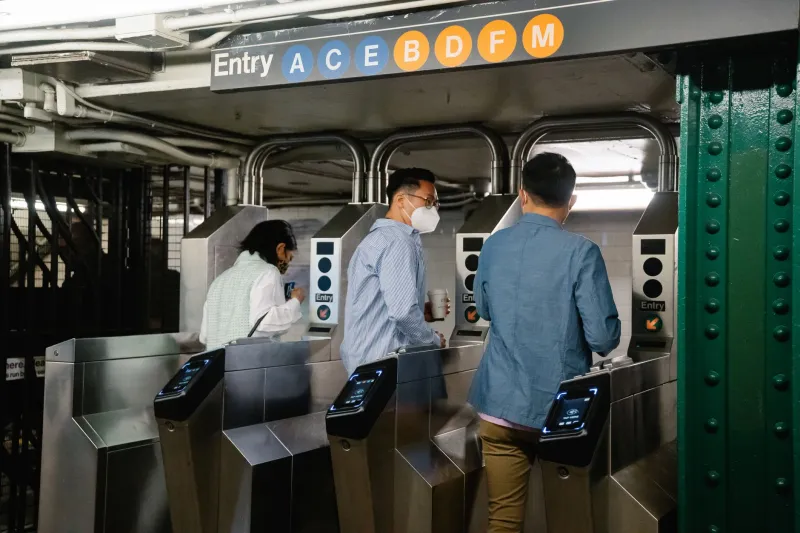
Here is where things get administratively creative. When you release someone from detention into the community, they need to be able to travel to their appointments. Reasonable enough. Tower Hamlets, Lewisham, and Hackney — all controlled by councils whose Green and far-left coalitions are philosophically committed to free movement in every conceivable sense — voted to provide unlimited Oyster cards as part of their 'Dignified Transition Support Package.'
The package also includes a weekly food allowance, emergency hotel accommodation if the person declares their temporary address unsuitable, and access to the full suite of public funds that the Greens abolished the No Recourse conditions for in their first Budget. You'll recall that Budget. It was the one where the Chancellor announced the measures with a straight face and the pound dropped four percent before she'd finished the sentence.
So to summarise: the individual the old system would have detained pending removal is now in Zone 2, fully funded, legally untouchable, and attending fewer check-ins than a self-employed plumber attends tax appointments. The state's response to this is a working group. We'll get to the working group.
Where Are The Police In All Of This?
Excellent question. The Metropolitan Police, having watched their immigration enforcement powers stripped away clause by clause through the Greens' first two legislative sessions, have largely retreated into what their internal HR documentation describes as 'operational recalibration.' Externally, this looks like a mindfulness retreat in the Brecon Beacons.
 Photo: Brecon Beacons, via cdn2.wanderlust.co.uk
 Photo: Metropolitan Police, via c8.alamy.com
This is not entirely unfair. When Parliament passed the Community Safety and Belonging Act 2027, it became legally questionable for officers to stop, question, or detain anyone on the basis of immigration status. When the follow-up Inclusive Policing Standards were issued by the new Welcome and Belonging Directorate, it became legally questionable for officers to ask for documentation if the person expressed emotional distress at being asked. Since expressing emotional distress at being asked is, statistically, what happens every time, the practical upshot is that immigration enforcement by the police now consists of officers standing nearby, radiating goodwill, and hoping for the best.
Detectives working serious organised crime involving foreign nationals have described the situation as 'trying to play chess when someone has removed the board.' One senior officer, speaking anonymously because she'd like to keep her pension, put it more plainly: 'We know who these people are. We know where they are. We are not allowed to do anything about it. I have been told to attend a course on trauma-informed policing. The course is in Cardiff. I am going to Cardiff.'
The Kicker: The Working Group
The Green Home Secretary — formerly the Green Shadow Home Secretary, formerly a housing campaigner in Islington, formerly a person who had never been to Luton — announced last Tuesday that she was 'taking the concerns seriously' and establishing a working group to examine the operational challenges of community-based immigration management.
The working group has twelve members. Four are academics specialising in migration and belonging. Two are representatives from refugee advocacy organisations. One is a restorative justice practitioner. One works for the community interest company that employs Ptolemy. One is a Green peer who describes herself as 'a passionate European.' One is from a think tank whose last published report was titled Borders As Trauma: Towards An Unbounded Civic Identity. One is a licensed counsellor. One could not be reached for comment because she was at a festival in Portugal.
Not one of them has ever worked in law enforcement. Not one has operational experience in immigration compliance. Not one has, as far as anyone can establish, spent meaningful time outside the London Borough of Islington in the past five years.
They will report back in eighteen months. Their recommendations will be non-binding. Ptolemy will continue sending WhatsApp messages on Tuesdays.
You voted for this because detention centres looked bad on Instagram. They did look bad. The alternative, it turns out, looks considerably worse — it just doesn't photograph as easily.
The Metropolitan Police's Brecon Beacons mindfulness retreat concludes on Friday. Officers return to duty Monday. Their powers remain unchanged. Cardiff, however, has never been safer.