You Gave Every UK Resident The Vote Regardless Of Citizenship And Now Oldham's 2031 Council Is Enthusiastically Anti-LGBT, Openly Sceptical Of Women In Public Life, And Extremely Clear On The Kashmir Question — The Green MP Has Issued A Statement Celebrat
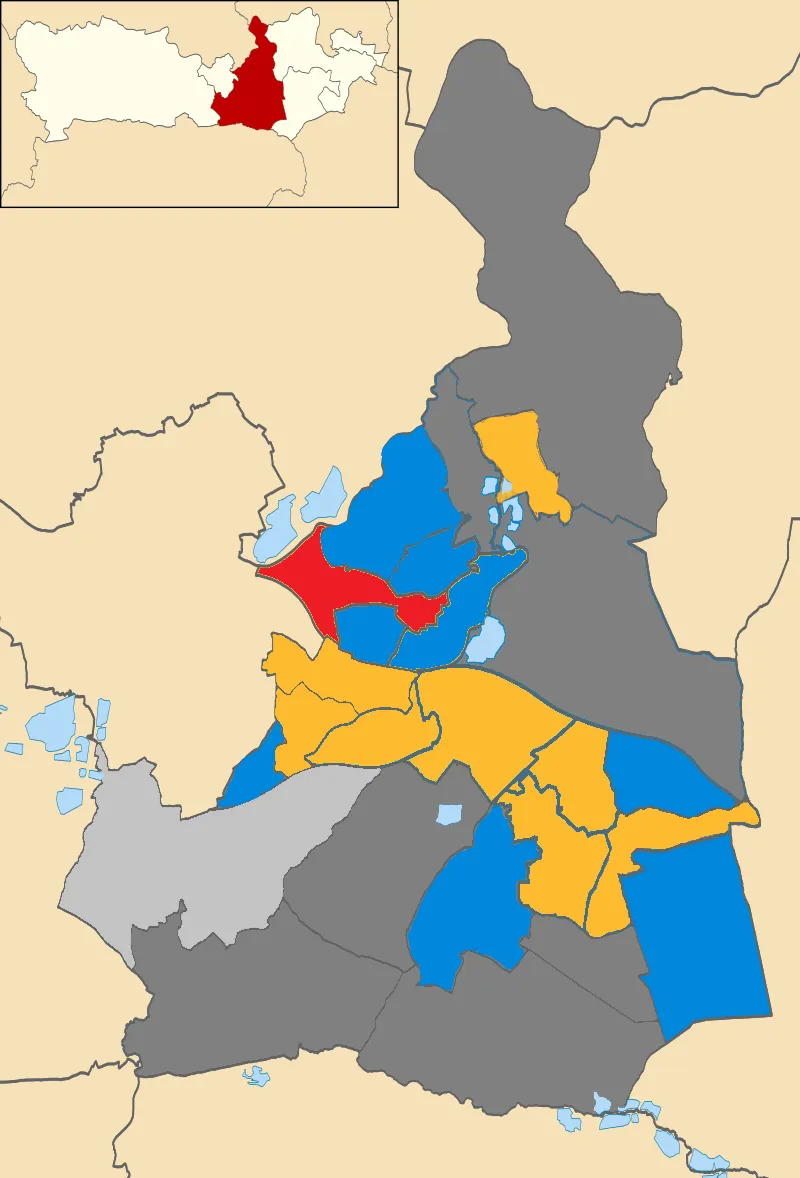
Photo: Fluffball70, CC BY-SA 4.0, via Wikimedia Commons
You Gave Every UK Resident The Vote Regardless Of Citizenship And Now Oldham's 2031 Council Is Enthusiastically Anti-LGBT, Openly Sceptical Of Women In Public Life, And Extremely Clear On The Kashmir Question — The Green MP Has Issued A Statement Celebrating 'The Vibrancy Of Diverse Democratic Expression' While Quietly Archiving Her Pride Month Content
There is a thought experiment that political philosophy undergraduates encounter in their first year, usually on a Tuesday afternoon when they haven't quite recovered from Monday. It goes like this: if you extend democratic rights without regard to whether the new participants share the foundational values democracy is designed to protect, what happens to those values?
The answer, it turns out, is not theoretical. It is Oldham. And it is 2031. And it is entirely, embarrassingly, preventably the Greens' own fault.
The Policy, Refreshed For Those Who Weren't Paying Attention
The Green Party's migration platform included, buried beneath the more immediately alarming proposals, a commitment to extend voting rights in all UK elections — including general elections — to every resident, regardless of citizenship status, length of residency, or any formal process of civic integration or naturalisation.
The logic, as presented, was straightforward: if you live here, pay taxes here, and your children go to school here, you should have a say in how the place is run. This is, on its surface, not an absurd position. Many democracies allow non-citizens to vote in local elections after a qualifying period.
The Greens, however, proposed no qualifying period. No English language requirement. No civics assessment. No pathway through which a new resident would encounter, even briefly, the liberal democratic values that British civic life is nominally built upon. You arrive. You register. You vote. The entire architecture of naturalisation — the process by which a person formally adopts the rights and responsibilities of citizenship, including its values — was dismissed as gatekeeping.
What the Greens did not appear to model, at any point in the policy development process, was the electoral arithmetic of what happens when you add several million new voters from countries that have, to put it diplomatically, a somewhat different relationship with liberal progressivism than the average attendee of a Green Party conference in Brighton.
Oldham, 2031: A Case Study In Unintended Consequences
Oldham is not an unusual place. It is a northern English town with a substantial British-Pakistani community, a complicated post-industrial history, and a set of political fault lines that have been building quietly for two decades. It is also, under the Greens' expanded franchise, a place where the electorate changed substantially between 2029 and 2031 as new arrivals — many from Pakistan, Bangladesh, and several Middle Eastern countries — registered to vote in numbers that shifted the local political centre of gravity.
The 2031 council elections produced a majority coalition that no Green Party strategist, staring at their campaign spreadsheets in a co-working space in Shoreditch, had modelled as a realistic outcome. The incoming councillors were not, by any stretch of the imagination, Green-aligned. They were socially conservative in ways that would have been career-ending for any mainstream British politician. Several had, on the campaign trail, expressed views on homosexuality that sat considerably to the right of Nigel Farage. One had described women working in mixed-gender public sector roles as 'not ideal.' Two had made the internal politics of Kashmir a central plank of their campaign platform, which is a remarkable achievement in a town whose most pressing issues are a crumbling leisure centre and a chronic shortage of secondary school places.
They won. Legitimately. Democratically. Under the rules the Greens wrote.
The Returning Officer's Existential Crisis
The returning officer for Oldham East, a career civil servant named Margaret who had processed elections without incident for nineteen years, reportedly spent the night of the count in a state of quiet professional collapse. She had done everything correctly. The ballot papers were printed. The boxes were sealed. The count was accurate. The result was the result.
What Margaret had not been equipped to handle was the phone call from the local Green Party branch asking whether there was 'any procedural mechanism to revisit the outcome on the grounds of value misalignment.' There was not. Margaret knew there was not. The caller, to their credit, also knew there was not. They asked anyway, in the way that people ask questions when they know the answer and simply cannot accept it.
Margaret has since requested a transfer to electoral administration in a different borough. Her request is pending.
The Green MP's Statement: A Masterclass In Linguistic Gymnastics
The Green MP for the area — elected in 2029 on a platform that included, prominently, commitments to LGBT+ equality, gender justice, and the expansion of democratic participation — released a statement the morning after the results.
It was four paragraphs long. The first celebrated 'the historic expansion of democratic voice to communities long excluded from civic participation.' The second acknowledged 'the complexity of a diverse democratic landscape.' The third noted that the Green Party 'remained committed to dialogue across difference.' The fourth announced a listening exercise.
What the statement did not contain: the words 'LGBT,' 'women's rights,' 'equality,' or any acknowledgement that the newly elected councillors held views directly, substantively, and irreconcilably opposed to every policy the MP had spent her career advocating.
Her Twitter — sorry, X — account, which had previously featured a Pride Month banner every June since 2017, underwent a quiet but comprehensive audit sometime between 11pm on election night and 7am the following morning. The rainbow profile frame was gone. The pinned tweet celebrating the Equality Act was unpinned. In its place: a repost of her own statement about 'democratic vibrancy.'
The account has not mentioned LGBT rights since. It has, however, posted twice about cycling infrastructure.
The Irony Is The Point
It is worth sitting with this for a moment, because it is genuinely extraordinary. The Green Party — the party most loudly, most persistently, most self-congratulatorily committed to progressive social values in British political history — designed and implemented a policy that handed decisive electoral power to communities statistically, demonstrably, and in many cases explicitly opposed to those values.
This was not unforeseeable. It was, in fact, foreseen — by everyone who raised the question and was told they were being racist for asking. The polling data on social attitudes within first-generation immigrant communities from majority-Muslim countries is not secret. It is not contested. It is published, regularly, by organisations with no political axe to grind. The attitudes toward homosexuality, gender equality, and secular governance within those communities are, on average, considerably more conservative than the British median — and dramatically more conservative than the Green Party's platform.
The Greens knew this, in the way that people know things they have decided not to think about. They extended the franchise anyway, because the alternative — acknowledging that democratic inclusion and progressive values can, in specific circumstances, be in direct tension — was ideologically intolerable.
Oldham's new council has its first meeting next Tuesday. The agenda includes a motion to review the town's LGBT History Month events programme. The Green MP has a prior engagement.
The returning officer has since been offered a role in electoral administration in the Outer Hebrides. She is giving it serious consideration. There are 112 registered voters on the island she'd be covering. None of them have particularly strong views about Kashmir.
 Photo: Outer Hebrides, via www.fodors.com