The Greens Unshackled The Ballot Box From Boring Old 'Citizenship' And Britain's Electoral Roll Now Features A Labrador Named Colin Who Voted Twice In The Walthamstow By-Election — The Returning Officer Has Resigned
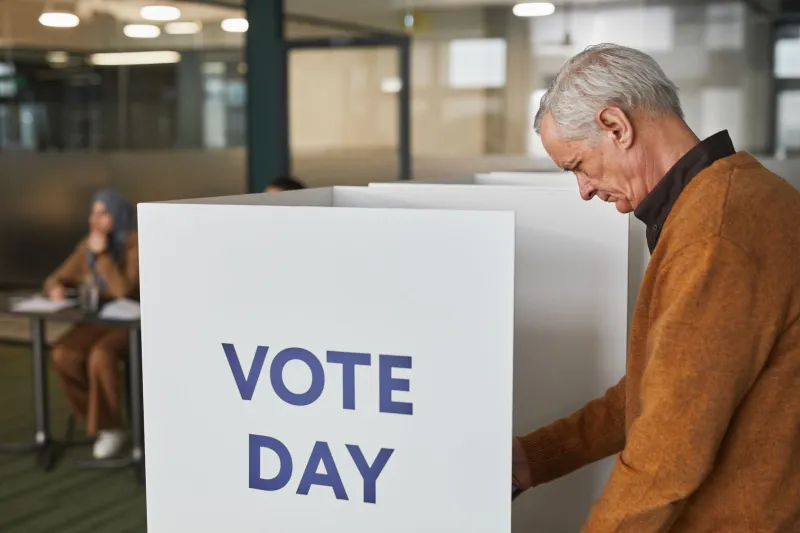
There's a beautiful simplicity to the Green Party's vision of democracy. Everyone who lives here should have a say. Residents, not just citizens. People, not passports. It sounds, when you squint at it in the soft light of a university common room, like an obvious moral truth. Why should an arbitrary piece of documentation determine whether your voice counts?
This is a reasonable question. It becomes a less reasonable question the moment you try to define 'resident,' remove all the bureaucratic machinery designed to verify that definition, and then hand out ballot papers to anyone who can spell their name — or, as Walthamstow discovered, anyone whose owner can spell their name.
Welcome to the Green Party's fully realised democracy. It's very inclusive. It's also completely ungovernable.
How We Got Here: A Brief History Of Very Good Intentions
The policy seemed modest at first. The Greens had long argued that non-citizen residents — people who pay taxes, raise children here, use the NHS, and contribute to communities — deserved a democratic voice. There's a version of this argument that is defensible. Several EU countries allow long-term residents to vote in local elections. New Zealand extends limited voting rights to permanent residents. It's not a lunatic fringe position.
But the Greens didn't stop at 'long-term permanent residents in local elections.' They never stop. The final policy, passed after a conference vote in which several delegates were later found to have been registered under names that didn't appear on any Home Office database, extended voting rights to all UK residents regardless of citizenship status, length of stay, visa category, or — and this is where it gets creative — formal identity verification.
The reasoning, as explained in a Green policy document that read like it was written by someone who'd had a very moving gap year, was that requiring ID to vote was itself a form of structural exclusion. Documentation requirements, the paper argued, 'disproportionately burden the most marginalised.' The solution was to remove the burden. All of it.
The Electoral Roll Becomes A Work Of Fiction
Within eighteen months of the policy's implementation, the Electoral Commission — what remained of it after its budget was cut to fund the new Office of Participatory Democratic Facilitation — began receiving reports from returning officers across the country that the electoral register had developed what one official described as 'anomalies.'
In Rotherham, three registrations were filed under names that an alert council worker recognised as characters from Peppa Pig. The names were, technically, names. There was no mechanism to reject them. The registrations stood.
In Walthamstow, a man named Gary Hutchins registered his Labrador, Colin, using a process that required only a proof of address — a utility bill, in Colin's case, which Gary had helpfully addressed to 'C. Hutchins' for tax reasons since 2019. Colin voted. Colin voted twice, in fact, because Gary's partner Karen had also registered him, slightly differently, as 'Colin H. Hutchins.' The Returning Officer raised this with the new Electoral Participation Oversight Body. The Body met once, couldn't achieve quorum, and was abolished six weeks later in a cost-cutting review.
By the 2031 general election, the Electoral Commission estimated that between 340,000 and 1.2 million registrations on the national roll contained 'unverifiable or potentially non-human identifiers.' The range is that wide because nobody is entirely sure how many people — or entities — are on the roll. The database doesn't have a 'species' field. Nobody thought to add one.
Germany Tried A Milder Version Of This. It Did Not Go Well.
It's worth pausing here to note that Britain is not operating in a historical vacuum. Other countries have experimented with expanded residency-based voting rights, and the outcomes are instructive.
Germany's more permissive approach to registering residents for local participation created, in several cities, a dynamic where newly arrived communities — arriving faster than any meaningful integration infrastructure could accommodate — voted as bloc constituencies for candidates whose platforms were, to put it diplomatically, not entirely aligned with the values of the parties that had opened the door to them in the first place. Hamburg. Frankfurt. Berlin. The pattern repeated.
The Green Party was aware of this. It was raised at conference. The delegate who raised it was accused of 'weaponising integration discourse' and the motion was tabled.
Britain, with a faster intake, weaker verification, and no minimum residency requirement whatsoever, has now run Germany's experiment at triple speed with the safety catches removed.
What The New Democracy Actually Looks Like
In several northern towns, the 2031 local elections produced councils whose manifestos — written and distributed in languages other than English, which is fine — contained no mention of climate policy, net zero targets, cycling infrastructure, or any of the other things the Green Party considers its foundational purpose. They did contain very detailed positions on foreign policy disputes that have no relevance to bin collection schedules.
The Green MP for one such constituency released a statement saying she was 'excited to see diverse communities engaging with democratic processes.' She did not comment on the new council's first motion, which proposed renaming the town's LGBTQ+ community centre.
Meanwhile, in more affluent areas where the existing population is dwindling — because they left, which is a separate article — the electoral rolls are increasingly populated by recent arrivals whose relationship to the concept of a Green councillor is, at best, theoretical. At worst, actively hostile.
The Greens built a democracy for everyone. The everyone that showed up wasn't who they had in mind.
Colin, For What It's Worth, Voted Green
We checked. Gary confirmed it. Colin, a six-year-old golden Labrador with strong opinions about squirrels and a moderate interest in bin day, cast his vote — both of them — for the Green candidate in Walthamstow.
He remains, to date, the Green Party's most ideologically consistent voter. He doesn't know what net zero means, he has no views on Pakistan's foreign policy, and he can't fill in a postal ballot without help.
In that respect, he's ahead of most of the parliamentary party.