You Voted Green Because They Promised To Support Climate-Displaced Communities And Now Leicester Has Officially Tabled A Motion To Recognise Kashmir As An Overseas British Constituency — Your Local Council's Climate Action Plan Has Taken A Slight Detour
The Hemp Tote Bag Betrayal
Remember Sarah from Oadby? Lovely girl, really. Voted Green in 2029 because she wanted more cycle lanes and fewer fossil fuels. She had visions of solar panels on every roof and community gardens where the car parks used to be. What she got instead was Leicester City Council spending three hours of its monthly meeting debating whether to formally recognise the Line of Control as "an illegitimate colonial boundary imposed by British imperialism."
Sarah's still waiting for those cycle lanes, by the way.
When Community Representation Goes Continental
You see, the Greens kept their promise about treating all migrants as citizens. They also kept their promise about giving all residents the right to vote. What they didn't mention in their manifesto was that "climate displacement" would apparently include anyone whose great-grandfather once lived somewhere that got a bit warmer, and that these newly enfranchised residents might have some rather specific political priorities that weren't exactly covered in the party's environmental policy handbook.
Leicester's latest council meeting agenda makes for fascinating reading. Item 3: "Motion to Install Electric Vehicle Charging Points." Item 4: "Motion to Condemn Indian Occupation of Jammu and Kashmir." Item 5: "Budget Allocation for Community Composting Schemes."
One of these things is not like the others, but apparently they're all equally valid expressions of local democratic will now.
The Hezbollah Playbook: A Masterclass in Municipal Capture
Anyone with even a passing knowledge of Lebanese history will recognise this playbook. Hezbollah didn't take over Lebanon overnight — they started small, embedding themselves in municipal politics, running community centres, providing services the state couldn't or wouldn't provide. Before anyone knew what was happening, local councils weren't just debating bin collection schedules; they were voting on foreign policy positions that had nothing to do with Lebanon and everything to do with Iran.
Sound familiar? Because Leicester City Council just voted to twin with Muzaffarabad, capital of Pakistan-administered Kashmir, as part of their "climate solidarity initiative." The motion passed 31 votes to 12, which is interesting mathematics when you consider that Leicester's traditional population probably wasn't clamouring for closer ties with disputed Himalayan territories.
The Carbon Footprint of Geopolitical Virtue Signalling
Meanwhile, Sarah's still cycling to work on roads that haven't seen maintenance since the Blair years, dodging potholes that could swallow a small car. The Green council she voted for has somehow found £200,000 for a "Kashmir Cultural Centre" but can't seem to locate the funds for the promised network of electric bus routes.
The council's climate action plan, once a pristine 47-page document full of renewable energy targets and carbon reduction strategies, now includes a curious new section on "solidarity with climate-affected regions experiencing territorial disputes." Page 23 onwards reads less like environmental policy and more like a particularly heated UN Security Council session.
Democracy: Be Careful What You Wish For
The beautiful irony is that Sarah's Green vote has delivered exactly what the party promised: a fully inclusive democracy where every voice is heard. She just didn't anticipate that some of those voices would be more interested in the politics of the Siachen Glacier than the politics of Leicestershire.
The council's latest initiative involves sending a "fact-finding delegation" to Srinagar to "assess the climate impact of militarisation on Kashmir's ecosystem." The delegation will cost £47,000 and includes the council's newly appointed "Climate Justice Coordinator" — a position that somehow requires extensive knowledge of subcontinental border disputes.
When Environmental Policy Meets Realpolitik
This is what happens when you hand democratic power to people whose primary political concerns were shaped somewhere else entirely. Leicester's Green councillors are discovering that their new constituents are perfectly happy to vote for renewable energy and recycling initiatives, but they're also rather keen to use their newfound political platform to settle scores that predate the existence of the Green Party by about seven decades.
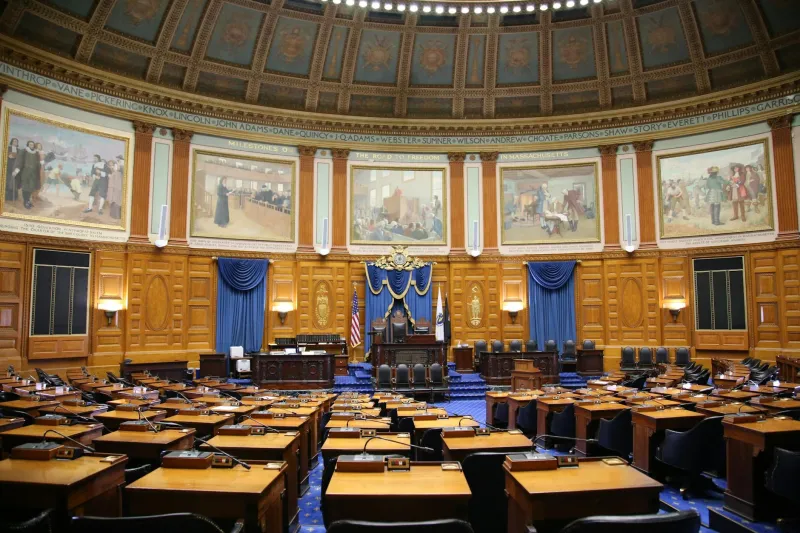
The council chamber now features a map of Kashmir prominently displayed next to the recycling targets chart. Both are apparently equally relevant to Leicester's environmental future, according to the new democratic consensus.
The View from Oadby
Sarah still has her hemp tote bag and her good intentions. She's also got a council that spends more time debating the Shimla Agreement than the state of Shimla Road (which, incidentally, has been closed for roadworks since 2031 due to "budget reallocation priorities").
The Greens promised to accept responsibility for climate displacement. They just forgot to mention that climate displacement apparently extends to anyone whose homeland experiences any form of geographical inconvenience, and that democratic representation means representing the interests of homelands that aren't actually home to Leicester.
Sarah's still waiting for those cycle lanes. But at least she can take comfort in knowing that Leicester City Council has taken a firm stance on the Kashmir conflict. That's definitely what she had in mind when she voted for environmental action.
Funny how democracy works when everyone gets a vote, isn't it?