You Voted Green To Make War History And Now Britain Is Quietly Funding The Uranium Enrichment Programmes Of Every Nation That Remembered To Mention Monsoons In Its Asylum Application — The Foreign Office Has Hired A Part-Time Consequences Officer And He's
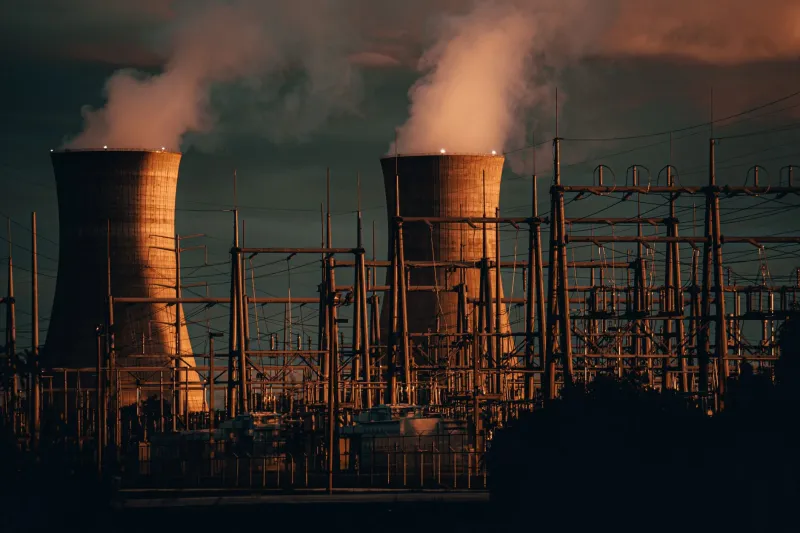
You Voted Green To Make War History And Now Britain Is Quietly Funding The Uranium Enrichment Programmes Of Every Nation That Remembered To Mention Monsoons In Its Asylum Application — The Foreign Office Has Hired A Part-Time Consequences Officer And He's Already On Stress Leave
You were very clear about what you wanted. You wanted Britain out of the arms trade. You wanted peace dividends. You wanted a foreign policy that didn't involve selling cluster munitions to people who use them on their own farmers. Entirely reasonable. Lovely, even. So you voted Green, they got in, they dismantled the Home Office, abolished No Recourse to Public Funds, and pledged to "accept Britain's responsibility for the climate emergency and support the people forced to move."
What they did not mention — not once, not in the manifesto, not in the leaflet, not in the Instagram Reel with the hopeful piano music — is that "the people forced to move" includes approximately 220 million individuals from Pakistan, a country with an active nuclear arsenal, a documented history of proliferating weapons technology to North Korea and Libya, and a government that has, in the past eighteen months, jailed three journalists, shot at two opposition rallies, and released a statement describing Britain as "a colonial aggressor" while simultaneously requesting £4.7 billion in climate adaptation funding.
You voted for peace. Congratulations. You're now financing it.
The Iranian Playbook, Now With Added Flooding
If this sounds familiar, it should. Iran ran a version of this script so effectively in the 1990s and 2000s that it ought to be a case study in every international relations degree in the country. The mechanism is elegant in its simplicity: present yourself as a humanitarian crisis, attract Western sympathy and funding, use the diplomatic goodwill generated by that sympathy to insulate your weapons programme from meaningful scrutiny, and then — crucially — continue enriching uranium while Western governments argue amongst themselves about whether criticising you constitutes Islamophobia.
Iran received billions in sanctions relief, humanitarian carve-outs, and diplomatic engagement during the very years it was spinning centrifuges at Natanz. The IAEA inspectors were shown carefully selected rooms. The rest of the world was shown carefully selected children's hospitals. It worked brilliantly.
Pakistan has watched, taken notes, and added a climate change chapter. The floods of 2022 were genuinely catastrophic — nobody serious disputes that. But the Pakistani government's response was not to implement the land reform that might have reduced rural poverty, nor to address the military's stranglehold on the national budget, nor to stop spending 18% of GDP on defence while asking Britain to pay for flood barriers. Their response was to hire a very good PR firm and start describing every displaced Pakistani as a climate refugee with a legal and moral right to British settlement.
Under Green policy, they'd be correct. Britain's responsibility for the climate emergency, in Green doctrine, translates to an open-ended obligation to house, fund, and enfranchise anyone from a country experiencing weather. Pakistan experiences weather constantly. So does everywhere else.
The Aid Budget Gets Creative
Here's where the fiscal mechanics become genuinely surreal. The Greens have committed to restoring Britain's foreign aid budget to 0.7% of GNI — roughly £15 billion annually — while simultaneously pledging that every migrant will be treated as a citizen with full access to public funds. These two commitments interact in ways that no Green spokesperson has ever been asked to explain on camera, presumably because the camera operator was too polite.
If you are treating incoming climate migrants as citizens, you are not technically sending foreign aid. You are running a domestic welfare programme for people who arrived from abroad. The money doesn't leave the country — it circulates within it, servicing the needs of a population that has grown by several million in the time it took Whitehall to locate the relevant policy documents. Meanwhile, the actual foreign aid budget — the 0.7% — is being disbursed to the governments of the countries those migrants came from, on the grounds that those countries are experiencing climate distress.
You are, in other words, paying both ends. You are funding the Pakistani government's climate adaptation strategy while simultaneously absorbing the population that government failed to protect, and providing that population with British public services. The Pakistani defence budget, freed from the burden of looking after its own citizens, remains entirely intact. The missiles remain entirely operational. Britain's Consequences Officer — part-time, based in a converted meeting room in Vauxhall — has written a memo about this. It has been acknowledged.
Lebanon Didn't Think It Would Happen To Them Either
Lebanon in 1970 was the most cosmopolitan, educated, and prosperous country in the Middle East. Beirut was called the Paris of the Orient. It had a functioning banking system, a free press, and a political culture that prided itself on accommodation and tolerance. It accepted Palestinian refugees on humanitarian grounds, extended them political rights, and integrated them into the civic fabric because it was the decent thing to do.
By 1990, Lebanon had experienced fifteen years of civil war, the effective partition of its capital, the destruction of its economy, and the permanent alteration of its demographic and political balance in ways that its original population had never voted for and could not reverse. The mechanism was not malice. The mechanism was the mathematical reality that when you extend political rights to a large incoming population with its own allegiances, priorities, and external sponsors, you change what the polity is.
Britain's Greens have looked at Lebanon. They have also looked at the Palestinian camps, at the Hezbollah social services network that filled the gap left by a collapsing state, at the Iranian money that flowed into that network, and at the current state of Beirut's electricity grid. They have concluded that the lesson of Lebanon is that Britain needs to be more welcoming.
The Consequences Officer has flagged this. His memo is in a pile. The pile is quite tall now.
What You Actually Voted For
You voted for a Britain that didn't sell weapons. Instead you got a Britain that funds the governments of countries that buy them, houses the citizens those governments failed to protect, and has no diplomatic leverage whatsoever because dismantling the Home Office also dismantled the only department with any institutional memory of why borders were considered useful in the first place.
The peace dividend is real. It's just being collected by someone else.
The Consequences Officer has requested a full-time contract. The request is under review. Mercury is apparently in retrograde and Bramble from the old immigration office is handling the paperwork.