You Voted Green To Take Back Control Of Britain's Energy And Now The National Grid Is Run By A Consensus Circle In A Converted Leisure Centre In Croydon — They've Been Debating Whether To Turn The Lights Back On Since February And The Motion Has Been Tabl
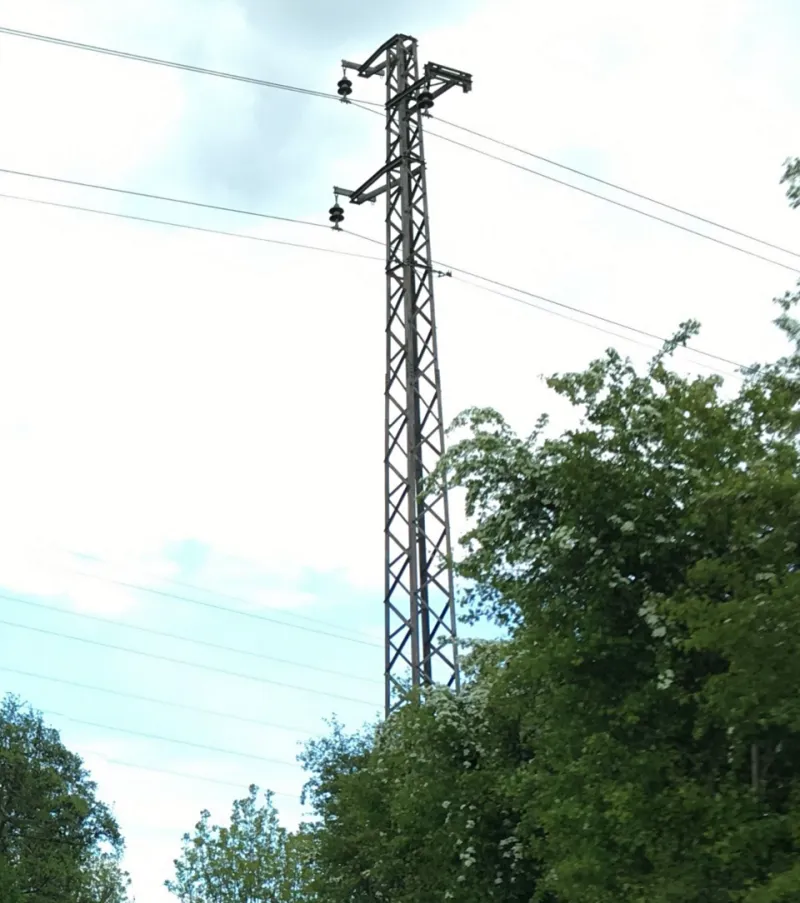
Photo: southglos, CC BY-SA 4.0, via Wikimedia Commons
You Voted Green To Take Back Control Of Britain's Energy And Now The National Grid Is Run By A Consensus Circle In A Converted Leisure Centre In Croydon — They've Been Debating Whether To Turn The Lights Back On Since February And The Motion Has Been Tabled Pending A Diversity Impact Assessment
The pitch was intoxicating. Energy — the most fundamental utility of modern life, the thing that heats your home and runs your hospital and keeps your food cold — wrested from the grip of profit-hungry corporations and returned to democratic public ownership. No more shareholders creaming dividends while pensioners choose between heating and eating. No more opaque pricing. No more energy companies posting record profits during a cost of living crisis while the government wrings its hands and offers you a £200 voucher.
People's energy. Community energy. Energy for the many, not the few — a phrase that has now been used so many times it has lost all structural integrity, much like Britain's actual power grid.
You voted Green. You got the people's energy. The people's energy is currently off.
The Vision: Democratically Controlled, Locally Accountable, Sustainably Powered
The Green Party's energy policy is, in outline, this: nationalise the grid, establish regional energy cooperatives with democratic governance structures, transition to 100% renewables, and ensure that decisions about Britain's energy infrastructure are made by communities rather than boardrooms.
There is something genuinely appealing about this. The privatisation of British utilities in the 1980s has had, to put it diplomatically, a mixed legacy. Water companies are pumping sewage into rivers while paying their executives telephone-number salaries. Energy companies posted combined profits of over £170 billion in 2022 while customers went into debt paying their bills. The argument that private ownership has served the British public well is, at best, complicated.
But here is the thing about energy infrastructure that tends to get lost somewhere between the vision statement and the implementation plan: it is extraordinarily complex, requires split-second decision-making, demands deep technical expertise, and operates on timescales measured in milliseconds. The National Grid balances supply and demand in real time, every second of every day, across a network of extraordinary engineering sophistication. It is not, in any meaningful sense, a thing that benefits from committee governance.
A Brief History Of Public Utilities That Should Have Taught Us Something
France's EDF — Électricité de France — is state-owned. It is also, by most measures, one of the most technically sophisticated energy companies on earth. France generates approximately 70% of its electricity from nuclear power, has some of the lowest consumer electricity prices in Western Europe, and exports power to its neighbours. EDF works because it operates as a professional engineering organisation with clear lines of authority, technical leadership, and the ability to make fast decisions.
EDF does not work because it is run by a consensus circle. EDF works because it is run by engineers.
Italy's Enel: state-controlled, professionally managed, technically expert. Germany's grid operators: regulated public infrastructure, run by specialists. The pattern is consistent. Successful public utilities are not successful because they are democratic in their internal governance. They are successful because they are competent.
The Green Party looked at this pattern and concluded the missing ingredient was more democracy. More stakeholder engagement. More community representation. More consensus.
This is like looking at a Formula 1 car and concluding it would go faster if the pit stop decisions were made by a show of hands.
Welcome To The Croydon Energy Collective
The South London Regional Energy Cooperative — one of seventeen such bodies established under the Green's nationalisation programme — operates out of the former Thornton Heath Leisure Centre, whose swimming pool was drained in 2027 to make room for the deliberative democracy suite. It has forty-seven members representing community groups, environmental organisations, trade unions, local councils, resident associations, and — this is real, this is an actual category — 'future generations,' represented by a 23-year-old named Cosimo who communicates exclusively in impact assessments.
Decisions are made by consensus. Not majority vote — consensus. Every member must actively consent to every significant operational decision. This was presented as a feature. It is, in practice, a mechanism for ensuring that nothing happens quickly, that nothing controversial happens at all, and that the most committed objector in any room holds effective veto power over the entire regional grid.
In February, a fault developed in a substation serving approximately 340,000 homes in Croydon, Bromley, and parts of Lewisham. The technical fix was identified within four hours. It required the replacement of two transformers and authorisation to reroute power from a neighbouring grid segment — a decision that, under the old system, would have been made by a duty engineer in about twelve minutes.
Under the new system, it required a full Collective meeting, which could not be convened until a quorum was established, which required forty-eight hours' notice under the Collective's own constitution, which had been drafted during a weekend workshop in 2026 by people who were primarily focused on ensuring it was sufficiently inclusive rather than sufficiently functional.
The quorum meeting established that the decision constituted a 'significant infrastructure intervention' requiring a full consensus process. The consensus process commenced. Member seven raised concerns about the carbon footprint of the replacement transformers. Member nineteen requested a procurement review to ensure the supplier met the Collective's ethical sourcing criteria. Cosimo tabled a diversity impact assessment.
The lights came back on in March. Partially. The diversity impact assessment is still pending.
The Expertise Problem Nobody Wanted To Mention
Here is a quiet catastrophe that unfolded in parallel with the governance catastrophe. When the nationalisation was announced, the engineers, grid operators, and technical specialists who actually run Britain's energy infrastructure — people with decades of experience managing one of the most complex systems on earth — were told they would now be working within a democratic cooperative structure reporting to a stakeholder board.
A significant number of them left.
Not because they were ideologically opposed to public ownership. Some of them were genuinely enthusiastic about it. They left because the governance structure made it impossible to do their jobs. Because every technical decision above a certain threshold required a committee process. Because they were being overruled on engineering questions by people whose qualification was that they lived nearby. Because the person who had spent thirty years managing grid frequency was now required to achieve consensus with a man named Tarquin who ran a community composting scheme and had very strong feelings about procurement ethics.
The brain drain was quiet, professional, and devastating. Britain's energy infrastructure is now operated by a combination of junior engineers who haven't left yet, contractors from abroad who are paid very well to tolerate the governance structure, and a steadily growing backlog of maintenance tasks that require authorisation levels nobody can agree on.
The Cold, Dark Punchline
You wanted energy companies to stop profiteering. Reasonable. You wanted bills to reflect actual costs rather than shareholder returns. Reasonable. You wanted democratic accountability for decisions that affect millions of people's lives. Also reasonable, in principle.
What you got was a system so paralysed by process that it cannot respond to a substation fault in under a month, so denuded of expertise that its most experienced people have gone to work for EDF — the French state energy company, run professionally, by engineers — and so committed to the principle of consensus that it has achieved the remarkable feat of making the old privatised model look like a model of responsive, accountable public service.
The lights are back on in most of Croydon now. The diversity impact assessment concluded in April. It found that the transformer replacement had been conducted in a broadly equitable manner, with some recommendations for improvement regarding the ethnic composition of the installation team.
The substation serving Bromley is currently making a noise that the duty engineer describes as 'concerning.' She has filed a preliminary notification with the Collective. The next meeting is in three weeks. Cosimo is already preparing the impact assessment.
Wear a jumper.