You Voted Green To Get Britain Moving And Now The 07:42 To Paddington Is Stuck In A Consensus-Building Workshop — The Points Failure Is Actually A Philosophical Disagreement About Capitalism
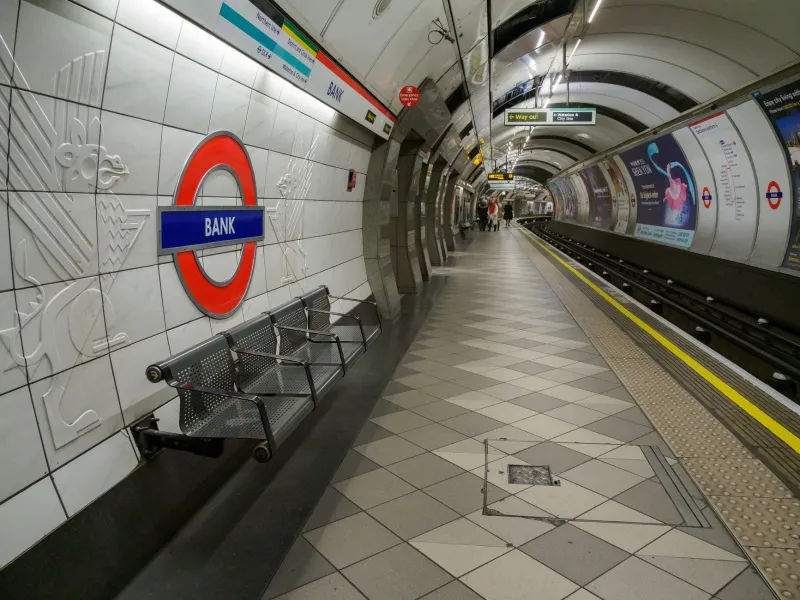
Cast your mind back to the heady days of the Green manifesto launch. There it was, printed on recycled paper in a font that whispered sustainability: a bold, beautiful promise to rip the railways from the cold hands of shareholders and return them to The People. No more eye-watering fares. No more cattle-class sardine tins rattling past Swindon. Just smooth, punctual, emissions-free travel for a grateful nation finally unchained from the fossil-fuel industrial complex.
You voted for it. Of course you did. You were twenty-six, you had a railcard, and the alternative was another five years of Avanti West Coast charging you £187 to stand next to a broken toilet between Crewe and Euston.
That was then. Welcome to now.
The People's Railway (The People Are Currently In A Meeting)
The Green Party's transport policy didn't just nationalise the railways. That would have been too simple, too old Labour, insufficiently radical. Instead, Britain's rail network was reorganised into a series of Regional Worker-Community Asset Collectives, each governed by a Stakeholder Participation Board comprising train drivers, station staff, passenger representatives, local councillors, three environmental groups, a rotating seat for 'affected wildlife corridor interests,' and — this is real — a 'Future Generations Liaison Officer' whose job is to represent people who don't exist yet.
Decisions require consensus. Not a majority. Consensus. Every single stakeholder must be brought along. This is, the Green Party assured us, how mature democracies do things. They pointed at Scandinavia. They always point at Scandinavia.
What they forgot to mention is that Scandinavia uses consensus governance for things like municipal park benches. Not for running 20,000 miles of track on which six million people depend daily to get to work, hospital, and their mother's house in Wolverhampton.
The Grievance That Stopped Britain
The first major operational crisis came in Month Four, when a track maintenance operative in the East Midlands Collective filed a formal grievance noting that the new fleet of electric trains featured seating upholstered in a shade of blue that, and we are quoting directly from the submission, "evoked the aesthetic language of privatisation-era corporate identity and was therefore psychologically hostile to worker dignity."
Under the old system, this would have been filed under 'B' for bin. Under the new Collective Governance Framework, it triggered a mandatory Stakeholder Wellbeing Review, which required a full board meeting, which required quorum, which required the Future Generations Liaison Officer to prepare an impact statement on behalf of people not yet born, which took eleven weeks because she was also doing it for the M62 resurfacing project.
While this unfolded, the East Midlands fleet sat idle in a depot outside Derby. Forty-seven trains. Just sitting there, in blue seats, waiting for philosophical clearance.
Passengers were told to use replacement bus services. The buses were diesel. Nobody mentioned this.
Efficiency: A Retrospective
Before the reforms, Britain's railways were, by most metrics, a mess. Expensive, unreliable, fragmented, and owned by companies with names that sounded like they'd been generated by a randomiser. This was bad. Nobody disputes this.
What the Green Party's transport architects failed to appreciate is that there is, theoretically, a state worse than 'expensive and unreliable.' That state is 'free but completely stationary.'
The Southern England Collective hasn't run a full timetable since the Autumn Plenary failed to reach consensus on whether the new ticketing app constituted 'digital enclosure of a public good.' The app, for reference, just tells you when trains leave. The Collective has been debating this since October. It is now June.
Meanwhile, the West Coast Main Line — once the jewel of British intercity travel — is currently the subject of a seventeen-month review after the Stakeholder Board voted to reclassify it as a 'Community Corridor Asset,' a legal designation that, it turned out, makes it technically impossible to run commercial services on without triggering a separate planning process. No one had checked this before the vote. The Future Generations Liaison Officer had flagged it in a footnote. The footnote was in Appendix D. Nobody reads Appendix D.
The Fare That Wasn't
To be fair to the Greens, they did abolish expensive fares. Travel is now, in principle, free at point of use, funded by a hypothecated Climate Mobility Levy applied to... well, it was supposed to be applied to aviation. But the aviation industry left. So it's now applied to car ownership. But car ownership dropped because petrol was banned ahead of schedule. So it's applied to a general wealth surcharge. But wealth is leaving too.
The Treasury's internal modelling — leaked to this website by someone who has since emigrated — shows the free rail system costs £34 billion a year to not run. That's the maintenance costs, the governance costs, the stakeholder facilitation costs, and the ongoing salary of forty-seven Future Generations Liaison Officers, one per collective, none of whom can agree on anything because they represent people who aren't here yet and therefore have no actual opinions.
What You Thought You Were Getting
You thought you were getting Japan. Clean platforms, punctual departures, a conductor in white gloves handing you a complimentary green tea as you glided silently past wind turbines at 200 miles per hour.
What you got was a nationalised asset governed by a committee that last achieved consensus on whether to order biscuits for the quarterly meeting (they went with oat-based, after a four-hour debate about palm oil that ended in two resignations).
The 07:42 to Paddington hasn't moved in eight months. It's currently being used as a venue for a community arts project exploring 'immobility as metaphor.' The artist-in-residence says it's going really well.
She takes the bus.