You Voted Green To Give Climate Refugees A Home And Britain Has Now Legally Adopted The Maldives — We're Also Apparently Responsible For Their Fishing Rights Dispute With India And The Treasury Has Just Found A Post-It Note That Says 'Oh No'
There is a corner of the Foreign, Commonwealth and Development Office — previously a quiet corner, the kind where someone keeps a spider plant and a mug that says 'World's Okayest Diplomat' — that has, since the passage of the Climate Displacement and Sanctuary Act 2027, become the most chaotic room in British government. Possibly in British history. Possibly in the history of rooms.
This is where the international law team sits. They have not slept properly since March. One of them has started keeping a whiteboard that just lists countries. He adds a new one every few days. He does not look well.
What You Thought 'Climate Asylum' Meant
You thought it meant this: a family from a low-lying coastal village in Bangladesh, their home periodically flooded by rising seas, would be able to come to Britain without being locked in a detention centre or bounced through seventeen years of legal proceedings. You thought it meant compassion with a system behind it. A humane response to a genuine crisis.
The Greens agreed. Their policy was unambiguous: anyone displaced by climate change has an automatic right to sanctuary in Britain, with full access to public funds, housing support, and welfare from day one. No income threshold. No visa cap. No recourse restrictions. Britain accepts its responsibility for the climate emergency and will support those forced to move.
This is a noble sentiment. It is also, when you apply it to the actual geography of climate change, a commitment to personally absorbing the population of several sovereign nations.
The Maldives Problem
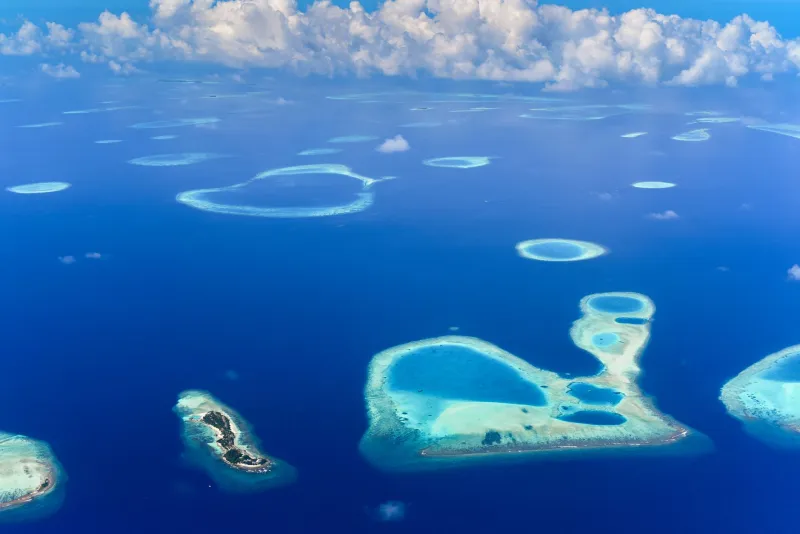
The Maldives has a population of approximately 520,000 people. It sits, on average, 1.5 metres above sea level. Under the Green Party's Climate Displacement framework, every single one of them qualifies for British sanctuary, benefits, and — under the companion policy of treating all migrants as citizens — the right to vote in UK elections within ninety days of arrival.
The Maldivian government, which had previously been engaged in a complicated set of negotiations with international bodies about managed relocation, climate finance, and preserving some form of national sovereignty during any transition, noticed this. They made some enquiries. Their lawyers made some enquiries. The enquiries produced a 340-page legal opinion that concluded, with the kind of confidence that only very expensive lawyers can project, that Britain's acceptance of responsibility for climate-displaced Maldivians might, under certain readings of international law, constitute a form of protectorate relationship.
The Foreign Office's response was a memo that circulated internally under the subject line 'URGENT: Is This What We Meant?' It was not answered satisfactorily. The spider plant died.
What A Protectorate Actually Means
A protectorate, for those who did not study international relations, is a relationship in which one state assumes responsibility for the defence and often the financial administration of another. Britain has had protectorates before. They required gunboats, significant administrative infrastructure, and a Victorian-era confidence in one's own ability to run other people's affairs that is no longer considered entirely appropriate.
What Britain does not have, and has not planned for, is the legal and financial machinery to absorb the sovereign obligations of a small island nation that is simultaneously:
- In a fishing rights dispute with India that has been unresolved since 2019
- Carrying approximately $3.4 billion in external debt, portions of which were structured against future tourism revenue that no longer exists because the islands are flooding
- Party to a bilateral defence agreement with a country that has now, through a chain of legal reasoning that the Foreign Office describes as 'creative but not entirely implausible,' become Britain's problem
- Home to a maritime exclusion zone that Britain may or may not now be responsible for enforcing
The Treasury was informed of this in a briefing note in September. The briefing note was returned with a single annotation in red pen. The annotation said: 'How.'
Tuvalu Called. So Did Bangladesh. And The Netherlands Have Sent A Formal Enquiry.
The Maldives was the test case. It was not the only case.
Tuvalu, a Polynesian nation with an average elevation of two metres, has a population of 11,000 and a government that has been remarkably proactive about its climate situation, having already negotiated a partial relocation agreement with Australia. When the British Climate Displacement framework passed, Tuvalu's lawyers filed a supplementary claim. If Britain was accepting climate-displaced persons with full citizenship rights, and if those persons retained their original nationality under dual citizenship provisions, and if their original nation was functionally uninhabitable, then questions arose about what happened to Tuvalu's seat at the United Nations, its exclusive economic zone, and its sovereign debt.
These are not hypothetical questions. They are questions that the UN's International Law Commission has placed on its 2028 agenda under the heading 'The British Situation,' which is not a heading that fills anyone in Whitehall with confidence.
Bangladesh is more complicated. Bangladesh has a population of 170 million people. Significant portions of it — the coastal delta regions, the low-lying south — experience regular catastrophic flooding that is, by any reasonable definition, exacerbated by climate change. The Green Party's policy did not specify a population cap. It did not specify a distinction between 'some people from a flood-affected region' and 'the entire population of a sovereign nation with the fifteenth-largest army in the world.'
The Home Office — or rather, the Community Migration Hub Network that replaced it — has received 4.2 million pre-registration enquiries from Bangladesh since the Act passed. Malcolm in Wolverhampton is not coping.
The Netherlands sent a more measured enquiry. They noted, politely, that large parts of their country are technically below sea level, and that while they had no immediate intention of relocating, they wanted to understand whether Britain considered this a qualifying condition. The Foreign Office replied that the matter was 'under active review.' The Netherlands thanked them and went back to managing their own flood defences, which they do extraordinarily well because they have been doing it for centuries and did not dismantle the relevant agency.
The Bill
The Office for Budget Responsibility released its emergency fiscal assessment in November. It ran to 200 pages. The executive summary was three words: 'This is bad.'
The full document modelled three scenarios for Britain's climate asylum commitments. The optimistic scenario assumed that only a small percentage of qualifying populations would actually relocate, that international law questions would be resolved in Britain's favour, and that the global community would share the financial burden. This scenario resulted in a budget shortfall of £340 billion over ten years.
The middle scenario assumed moderate uptake and partial legal liability for protectorate obligations. The shortfall was £1.2 trillion. The document noted that this figure 'does not include contingent liabilities arising from inherited sovereign debt or territorial dispute resolution costs, which remain unquantified.'
The pessimistic scenario was left partially blank. The economist responsible wrote, in the margin, 'I don't think the numbers go this high in the standard model' and went on compassionate leave.
The Flag
Somebody — and an inquiry is ongoing into exactly who — authorised the flying of a Union Jack over the administrative building in Malé, the Maldivian capital, in a gesture of 'solidarity and shared responsibility' following the first formal intake of climate-displaced Maldivians under the new framework.
The photograph went everywhere. It was not received well internationally. India issued a statement. China issued a longer statement. The United States asked, through diplomatic channels, whether Britain was 'doing a colonialism again, but accidentally.'
The Green MP who championed the Climate Displacement Act issued a statement clarifying that the flag-flying was 'not intended to imply territorial claim' and represented 'symbolic solidarity with a people in crisis.'
The international law team in the Foreign Office saw the statement. One of them added a new country to the whiteboard. Another one watered the new spider plant. They have learned not to get attached.
You voted for compassion. Britain got a foreign policy crisis, a fiscal catastrophe, and a fishing rights dispute with India that nobody briefed the Foreign Secretary on until it was in the papers.
The Maldives is lovely this time of year, apparently. You should visit. While it's still there. While we still technically own it.